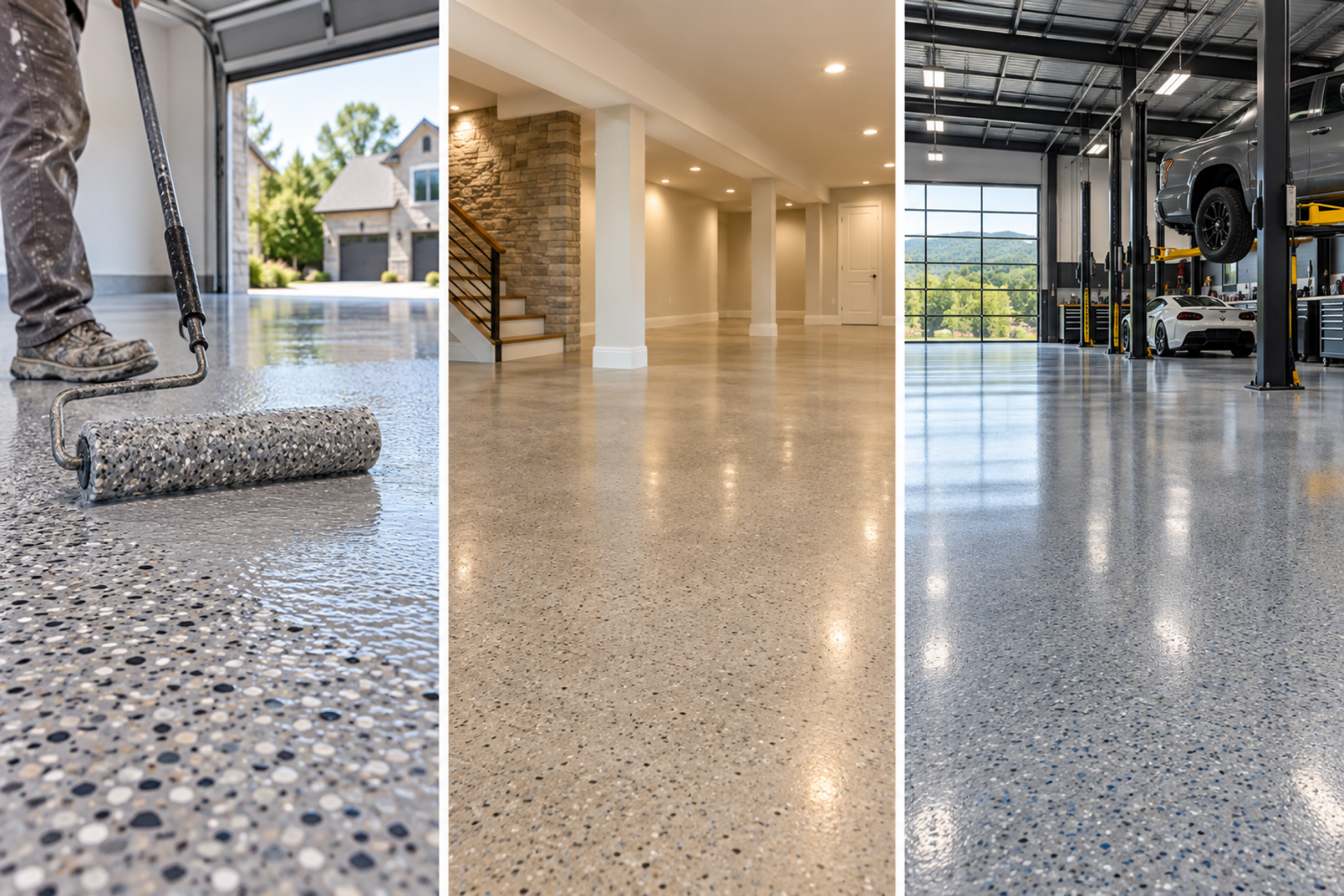
Basement floor coatings are resin systems selected for below-grade concrete, where moisture vapor and existing conditions deserve extra attention. A coating can improve cleanup and appearance, but it should not be used as a shortcut around active water intrusion or unresolved drainage problems.
What a careful evaluation should cover
The best first conversation is about moisture, cracks, former flooring, and how the basement will be used—not a flake color.
- Concrete condition, contamination, and any existing coating
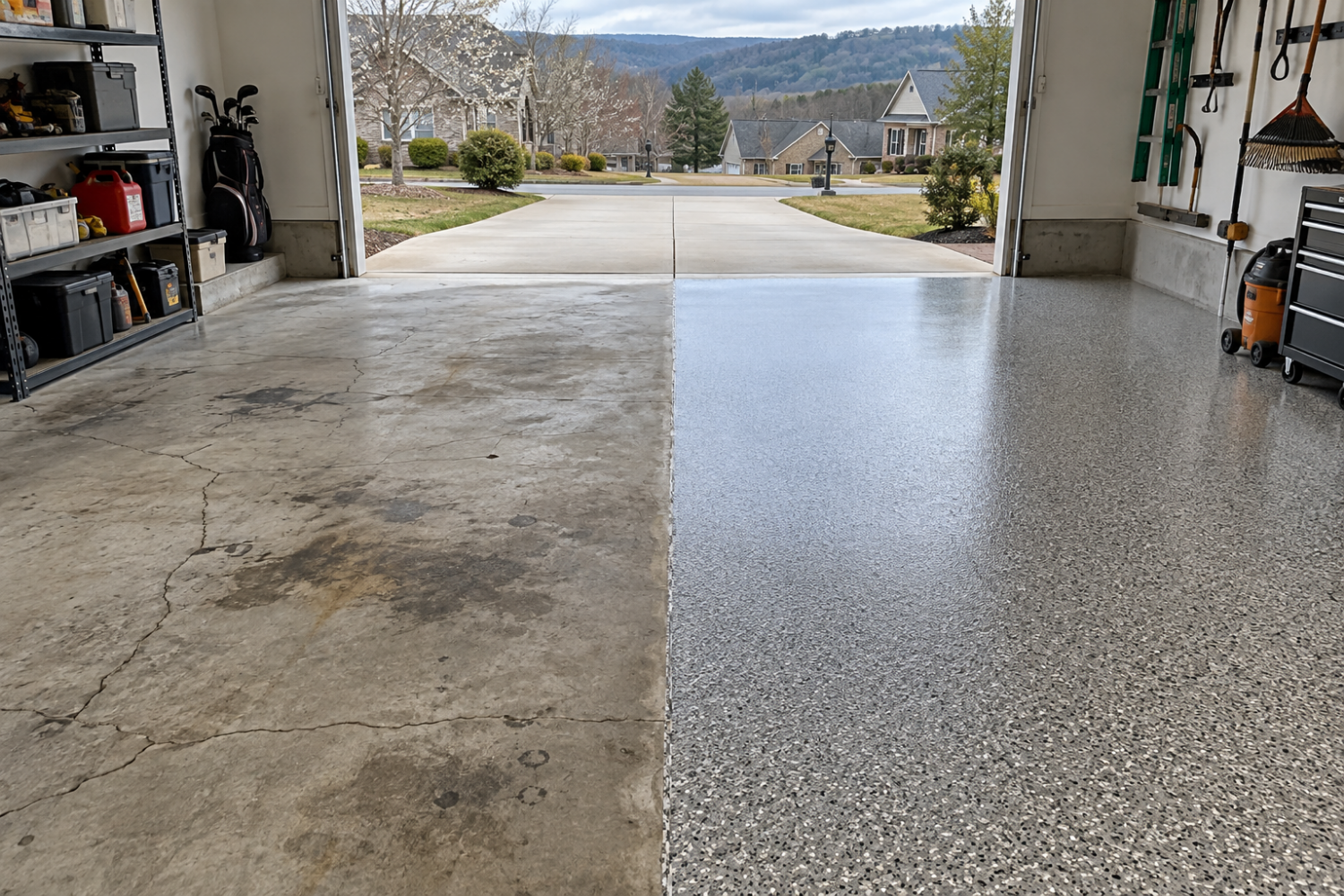
- Cracks, spalls, joints, and signs of moisture
- Traffic, sunlight, chemical exposure, and the intended finish
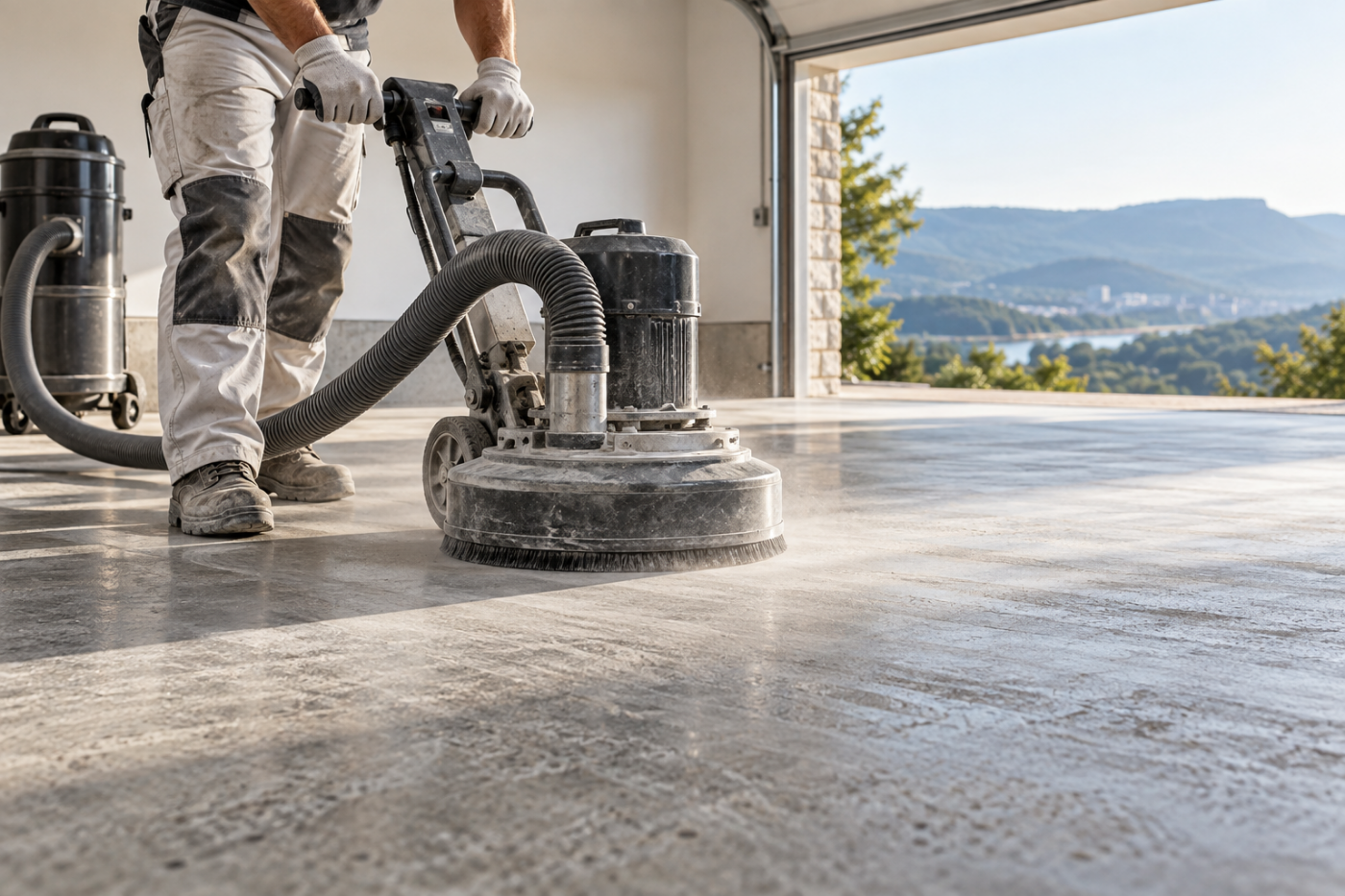
- Preparation method, repair scope, and realistic return-to-service timing
Questions to put in writing
Ask who is doing the preparation, whether diamond grinding is included, what repair work is assumed, how change conditions are handled, and what the final system layers are. A clear scope is more useful than a broad “lifetime” claim with no detail behind it.
Related Chattanooga resources
Read our polyaspartic vs. epoxy comparison, garage floor coating cost guide, and garage preparation checklist before requesting a quote.