Epoxy and polyaspartic are not interchangeable labels. Their role depends on the complete system, concrete condition, UV exposure, installation window, and the performance expectations for that garage.
The short answer
Epoxy and polyaspartic are not interchangeable labels. Their role depends on the complete system, concrete condition, UV exposure, installation window, and the performance expectations for that garage.
What matters in a real estimate
Ask which layer uses which chemistry, why it was selected for the slab, what preparation it requires, and how the system handles cure timing and sunlight.
What to look at before you decide
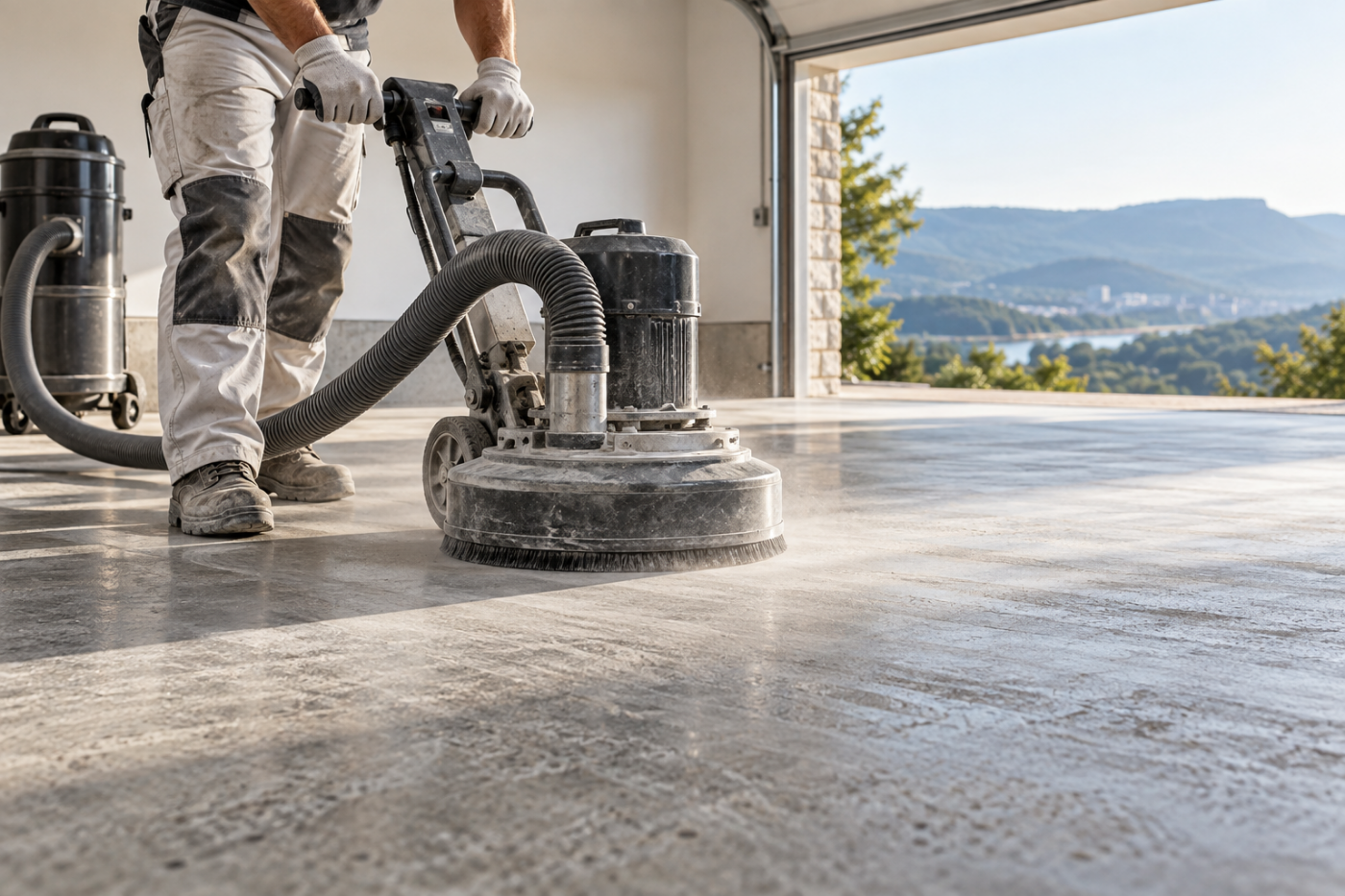
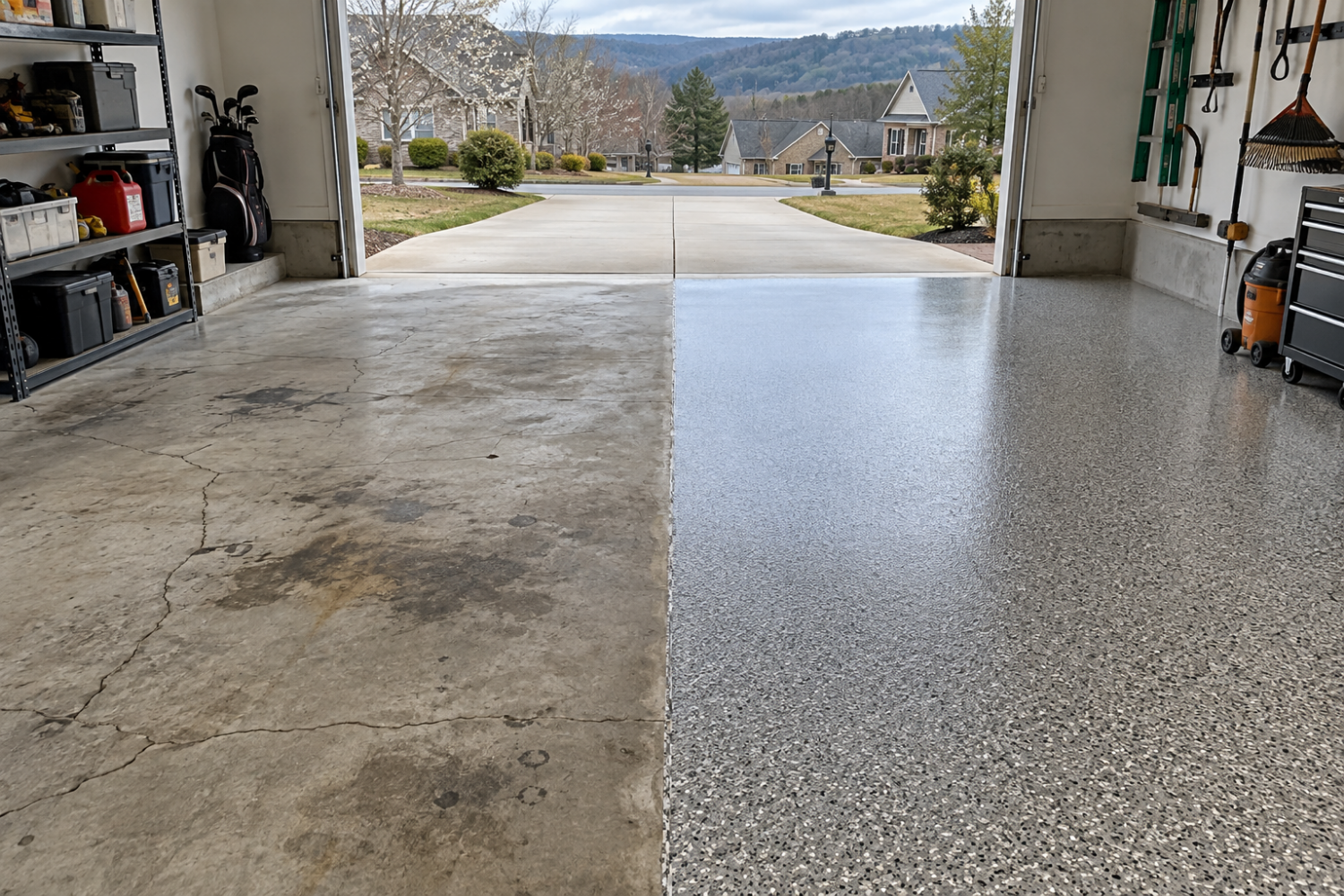
Start with the concrete. Look for oil staining, paint, old sealers, cracks, surface deterioration, water entry, and the amount of direct sun and vehicle traffic. Then compare proposals based on the preparation and system layers they actually describe.
| Question | Why it changes the answer |
|---|---|
| What condition is the concrete in? | Prep and repair work change when the slab has contamination, paint, or damage. |
| How is the garage used? | Parking, workshops, storage, and show spaces place different demands on the finish. |
| How quickly is the space needed? | Cure schedules differ by product and installation conditions. |
A better next step
A proposal should name the actual layers and their purpose rather than treating one material name as a universal guarantee.
Read the garage coating service guide, compare polyaspartic systems with epoxy flooring, then request a local assessment. A good provider will make the scope legible before asking you to choose a color.
Questions homeowners ask
Is polyaspartic always better than epoxy?
Polyaspartic and epoxy are both used in professional concrete-coating systems. Polyaspartic is known for fast cure and UV stability; epoxy is often selected for build and bond. The slab and entire system determine whether either one makes sense. The right answer comes from the slab condition and the specific system proposed, so ask for that detail in the written scope.
What coating handles hot tires?
Polyaspartic and epoxy are both used in professional concrete-coating systems. Polyaspartic is known for fast cure and UV stability; epoxy is often selected for build and bond. The slab and entire system determine whether either one makes sense. The right answer comes from the slab condition and the specific system proposed, so ask for that detail in the written scope.
Does Chattanooga humidity affect the choice?
Polyaspartic and epoxy are both used in professional concrete-coating systems. Polyaspartic is known for fast cure and UV stability; epoxy is often selected for build and bond. The slab and entire system determine whether either one makes sense. The right answer comes from the slab condition and the specific system proposed, so ask for that detail in the written scope.