
Sweep or blow loose grit first, then use a neutral-pH cleaner diluted according to its label and a soft mop. Avoid abrasive pads and harsh solvent experimentation; the installer’s written maintenance guidance controls when it differs.
Why this detail changes the project
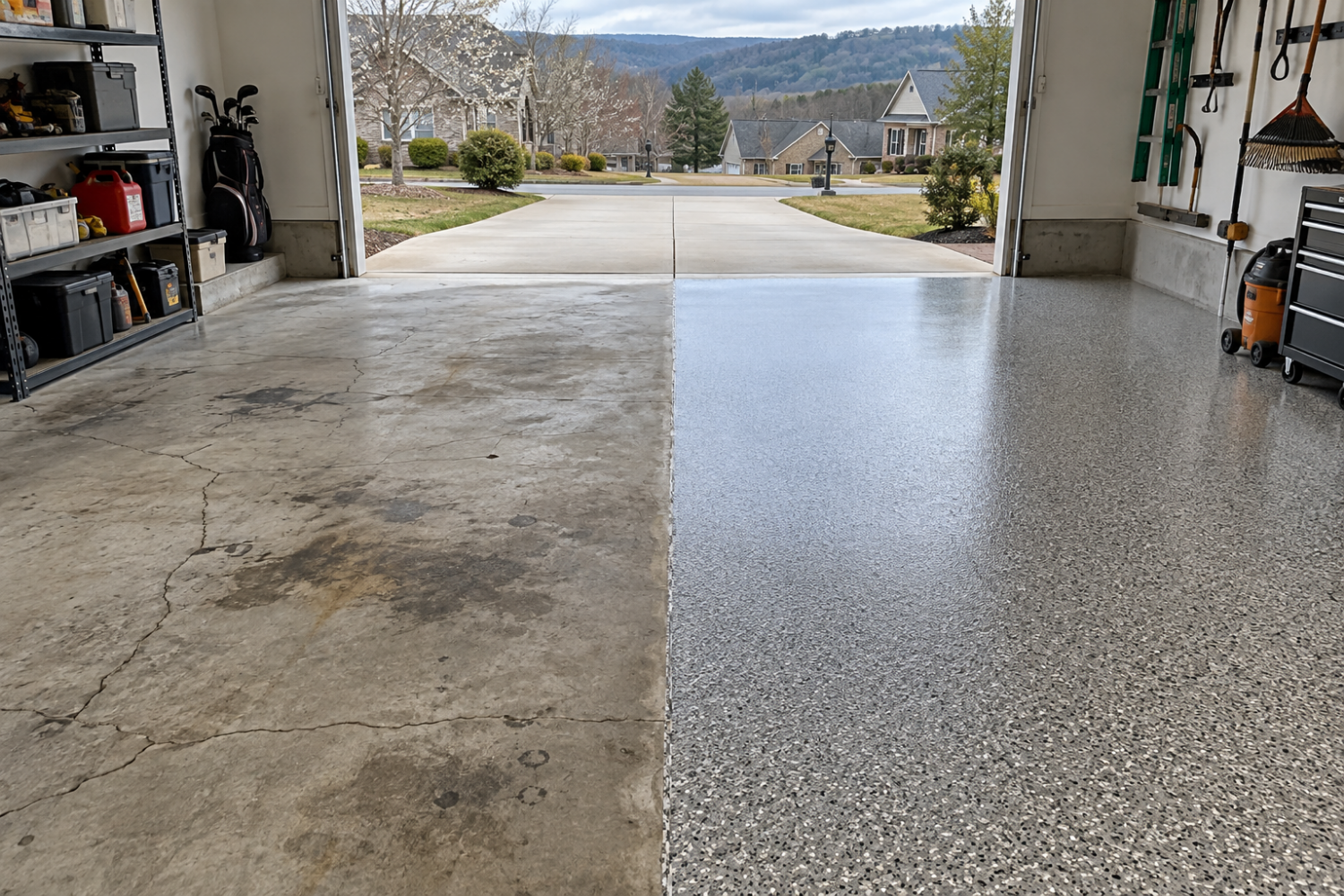
A maintenance routine that removes grit and spills without turning every cleanup into a chemistry experiment. A good coating conversation turns the visible condition of the floor into a defined scope, rather than hiding it behind a single product label.
Use this at the estimate
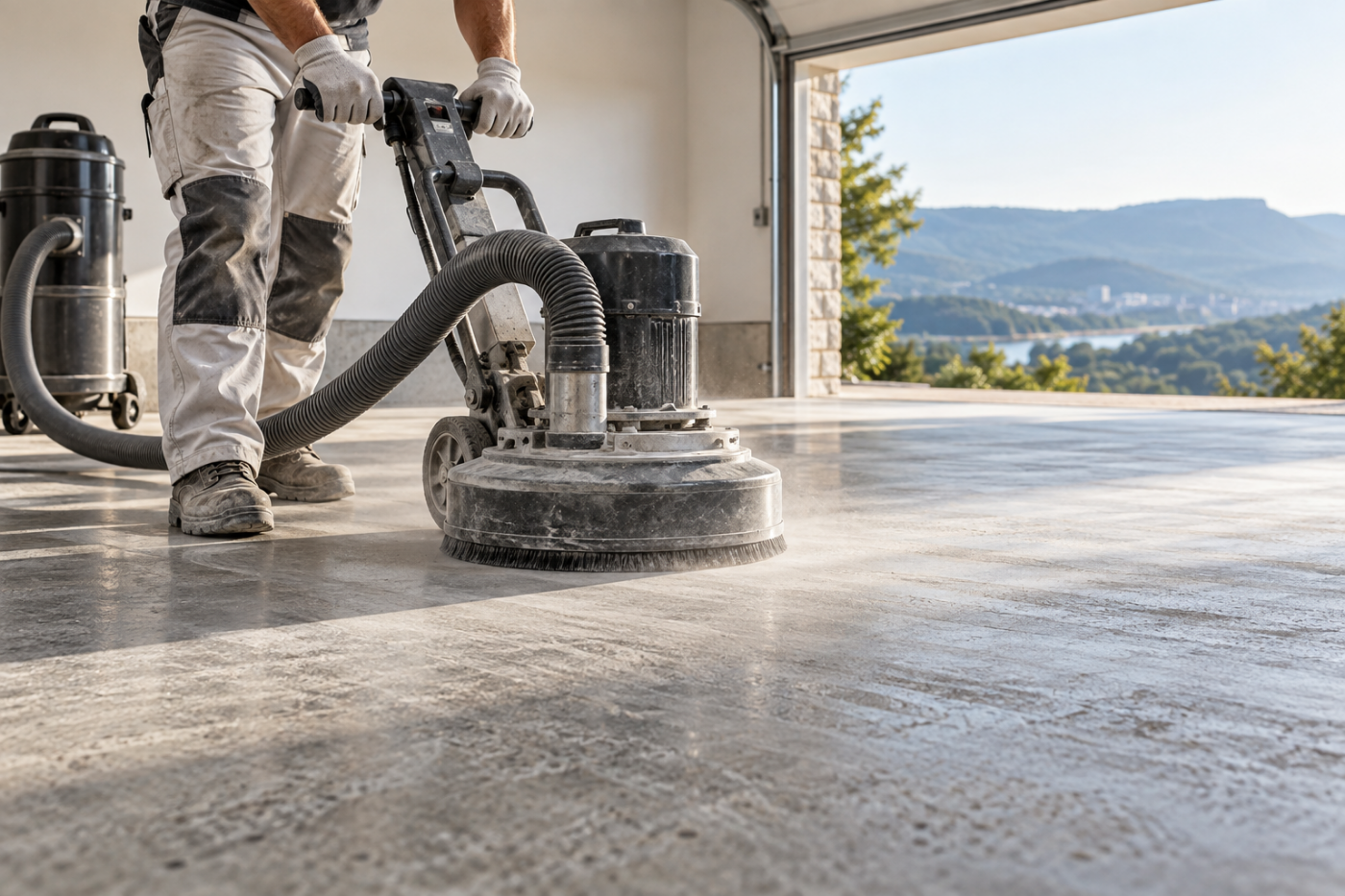
- Take a few photos in natural light, including edges, cracks, stains, drains, and existing paint.
- Describe how the garage is used and when vehicles or storage need to return.
- Ask the provider to state the preparation, repair assumptions, system layers, and timing in writing.
Related reading
Continue with the garage coating quote checklist, moisture guide, and garage coating service guide.
The right routine depends on the topcoat, the age of the floor, and what was spilled. Start with the least aggressive approach and treat automotive fluids promptly.
Sweep or blow loose grit first, then use a neutral-pH cleaner diluted according to its label and a soft mop. Avoid abrasive pads and harsh solvent experimentation; the installer’s written maintenance guidance controls when it differs. The product data and the actual slab condition should control the final recommendation, so request that explanation in the written proposal.
How should I remove an oil spot from a coated floor?
Sweep or blow loose grit first, then use a neutral-pH cleaner diluted according to its label and a soft mop. Avoid abrasive pads and harsh solvent experimentation; the installer’s written maintenance guidance controls when it differs. The product data and the actual slab condition should control the final recommendation, so request that explanation in the written proposal.
Can a pressure washer damage a garage coating?
Sweep or blow loose grit first, then use a neutral-pH cleaner diluted according to its label and a soft mop. Avoid abrasive pads and harsh solvent experimentation; the installer’s written maintenance guidance controls when it differs. The product data and the actual slab condition should control the final recommendation, so request that explanation in the written proposal.